INSPECT
Check rust severity, factory finishes, previous coatings and what components can be safely removed.
We look at the vehicle in front of us—not just the year on the registration. The right prep and product matter more than an impressive-sounding promise.
FIND YOUR PLAN ↗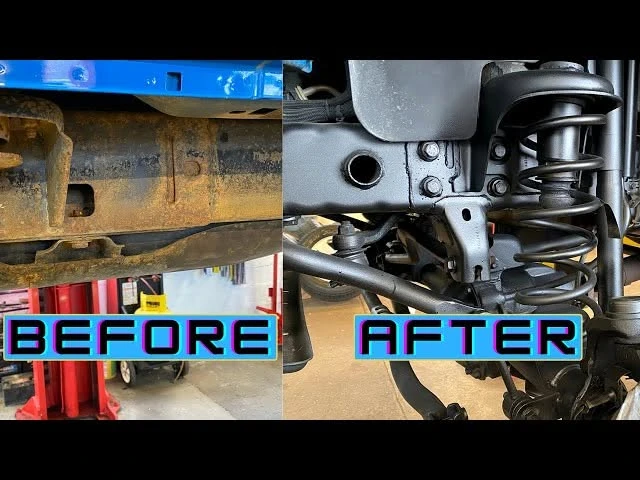
Properly applied coatings help shield appropriate surfaces from moisture, salt, and road debris. They do not reverse existing corrosion.
VIEW OUR WORK →Our process is matched to the coating chosen and the actual condition of your vehicle.
Check rust severity, factory finishes, previous coatings and what components can be safely removed.
Clean and dry surfaces as required. Remove approved liners and spare tire when that service is included.
Apply approved coatings to eligible surfaces, photograph work, and explain care and follow-up.
We'd rather help you understand the differences before selling you something you don't need.
You can request a Hard-On eligibility inspection, but we do not automatically approve hard coating over rust. The manufacturer's current product guidance calls for rust-free surfaces. Existing rust must be assessed and appropriate preparation confirmed before any hard coating is recommended.
We usually start by recommending Fluid Film or Original Woolwax for vehicles older than 2020. However, a clean older vehicle may qualify for Hard-On after inspection. Condition matters more than age alone.
Original Woolwax remains a thick, non-drying protective film. Woolwax Hard-On is an entirely different, water-based hard-shell exterior coating. Hard-On is not intended for oily surfaces or internal body cavities.
No. Protection can help slow future corrosion, but it does not repair damaged metal or restore structural strength. Severe rust may need repair before any protective treatment.
Yes, with the Deep Access and Complete Preservation tiers where safe and feasible. We assess what can be removed and reinstalled properly on your specific vehicle, and quote any extra labor before work begins.
Our Complete Preservation tier offers eligible cavity treatments using accessible factory openings. We don't promise access to every closed cavity; drilling isn't included unless separately discussed and approved.
Yes. Manufacturer guidance specifies approximately 72 hours for full curing under suitable conditions, and application between 50°F and 90°F. We explain the practical handover instructions with your quote.
Tell us about your vehicle and see the starting price before we inspect it.